
Revive Bath Co · Homeowner guide
Bathroom Water Damage Signs: What to Check Before a Remodel
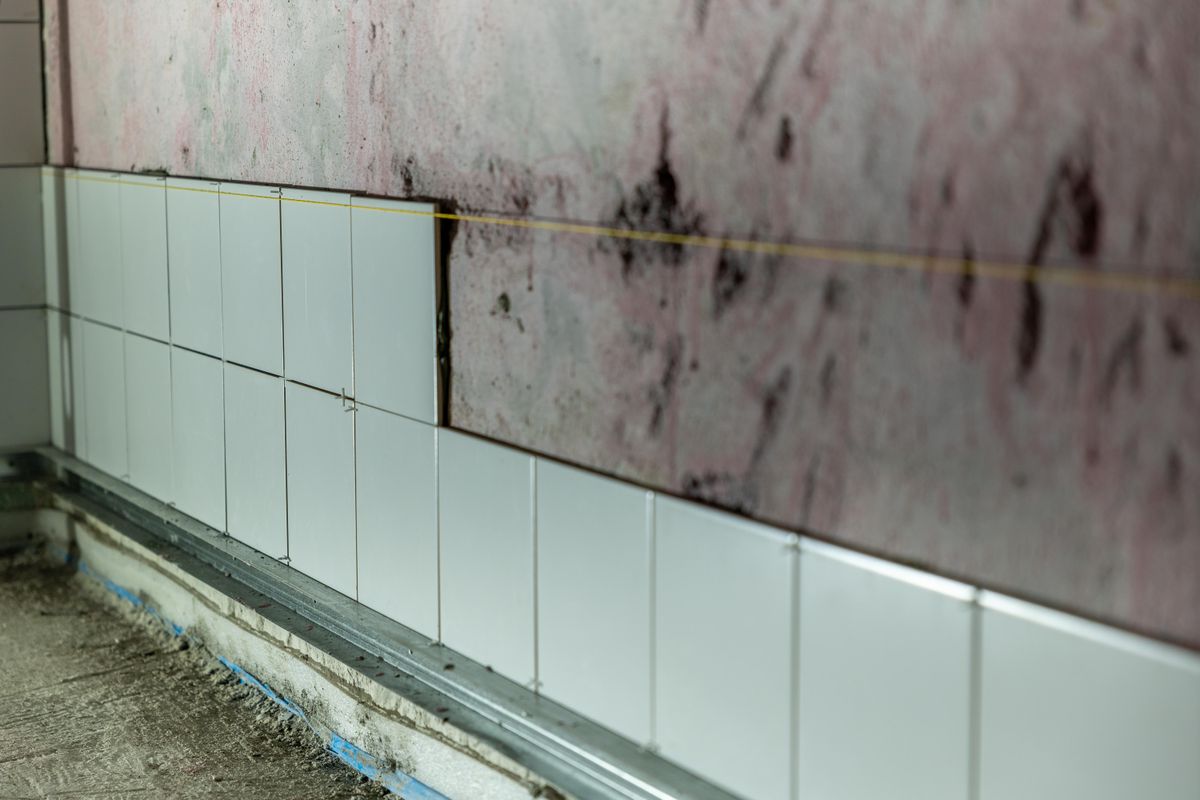
Recurring water outside the fixture, staining, damaged finishes, a musty odor, or a soft-feeling area can warrant assessment, but none proves the extent or source of hidden damage by itself. Address an active leak promptly and establish the cause before covering the area with new finishes.
Clear planning information, primary-source links, and a scope you can discuss.
 Practical decisions. Thoughtful planning.
An informed starting point
Understand the decision before choosing the finish
A bathroom can look nearly normal while a water problem needs attention, and a visible stain can also be the record of an earlier repaired event. The important distinction is whether moisture is active, what causes it, and which materials are affected. A list of signs is not a remote diagnosis.
This guide helps homeowners prepare information for an appropriate contractor or professional. It is not a mold testing protocol, structural assessment, or instruction to open walls yourself. Avoid disturbing unknown damaged materials to confirm a suspicion, particularly where electrical, structural, or lead-paint concerns may exist.
Begin with your priorities
Describe the actual tasks, condition, or scope you want to improve. A specific question gives a consultation direction.
Check the whole arrangement
Review the layout, underlying preparation, products, and responsibilities together instead of assuming a label explains them.
Keep the plan in writing
Ask for selections, scope, timing, repair approvals, care, and applicable coverage so the decision remains understandable.
Planning detail 1
Record water where it should not be
If water repeatedly appears outside the tub or shower, note when it occurs and take photographs from a safe position. Tell the assessor whether it follows normal use, whether a seal has been repaired, and whether the water appears near the drain or another connection.
Stop using a fixture with an active leak and arrange appropriate help. Keep away from wet electrical equipment or other immediate hazards. Do not turn a remodeling consultation into the only response to a water problem that is continuing to affect the home.
Planning detail 2
Treat stains and damaged finishes as clues
Discoloration, peeling finishes, swollen trim, or a soft-feeling floor can justify investigation. Their appearance does not tell you the exact source, how much material is affected, or whether the condition is current. Share prior repair records so the assessor does not have to guess at the history.
Do not drill, lift flooring, or open painted walls simply to confirm a suspicion. The scope of assessment should reflect the condition and possible hazards. For homes built before 1978, disturbing painted surfaces can raise lead-safe work questions that should be addressed before demolition.
Planning detail 3
Distinguish mold guidance from a diagnosis
The EPA explains that moisture control is central to preventing indoor mold growth. A musty odor or visible growth is a reason to investigate moisture, but it is not a reliable measure of hidden extent or a species identification. This guide does not infer health effects from a photograph.
EPA guidance describes circumstances where professional assistance is appropriate, including more extensive problems or water damage involving contaminated water. Seek the right help for the situation rather than apply a generic cleaning instruction to every damaged bathroom. Fixing a water source and deciding which materials need work are separate tasks.
Planning detail 4
Ask what a replacement will actually repair
New acrylic panels, a fresh enclosure, or new caulk do not automatically solve a leaking drain, damaged subfloor, or ventilation problem. The proposal should explain the preparation and any specific repairs within the scope. A surface update should not be presented as proof of remediation.
If the existing fixture is removed, hidden findings may change the work. Ask how the contractor documents them, prices the additional task, obtains approval, and revises timing. That process should be understood before demolition, not improvised after the area has been opened.
Planning detail 5
Keep moisture care in the handoff
After an appropriate repair or replacement, follow the system's cleaning and sealant-care instructions. Discuss ventilation separately from the wall material. The EPA recommends keeping indoor humidity below 60 percent, ideally between 30 and 50 percent, but that range is not proof that a particular wall or floor is dry.
Keep the repair record, photographs, scope, and care documents together. If water returns, report the timing and location rather than repeatedly hiding it under another surface repair. A useful follow-up starts with information about what happened, not an unsupported conclusion about the cause.
Primary sources and clear limits
Research to support better questions
Moisture control, not surface-only promises
The EPA moisture guide emphasizes fixing water problems and controlling humidity. It recommends indoor humidity below 60%, ideally 30% to 50%. Air humidity is not a measurement of hidden wall or floor condition, and a new wall finish is not proof of remediation.
Before disturbing paint in a home built before 1978, discuss applicable lead-safe requirements. The EPA renovation guidance explains covered work and exemptions; age alone does not identify lead in a particular surface.
| Observation | Useful information | Needs assessment |
|---|---|---|
| Water outside the shower | When and where it appears | Drain, joints, spray, and plumbing |
| Stain or swollen finish | Repair history and changes over time | Whether the source is active |
| Musty odor or growth | Location and moisture history | Extent and appropriate response |
| Soft-feeling surface | Location without disturbing it | Material and structural condition |
Prepare for the conversation
Your consultation checklist
- Respond promptly to active leakage and avoid hazardous areas.
- Photograph visible changes without opening materials yourself.
- Share earlier repairs and any known water events.
- Ask which repairs are included and how hidden findings are approved.
- Keep ventilation and product care separate from a promise of new surfaces.
What Revive Bath Co can discuss
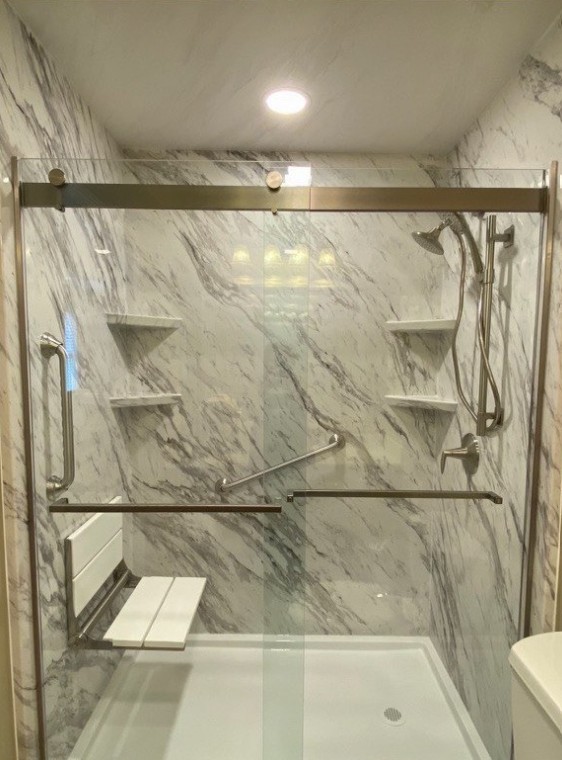
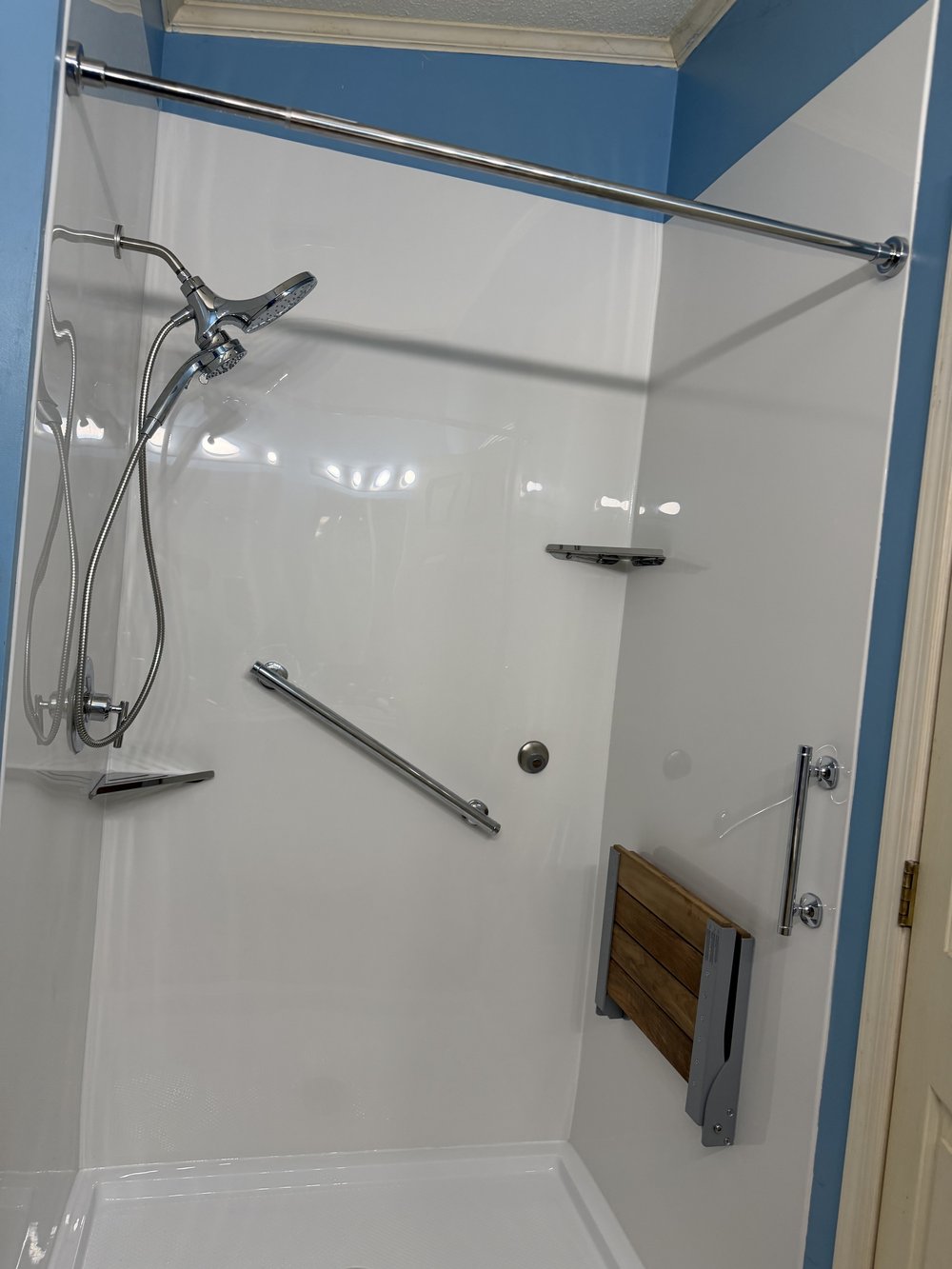
Our published services focus on tub-to-shower conversions and shower replacements with acrylic walls. We do not install walk-in tubs. Tell us about any desired work outside the bathing area so the proposed scope and responsibilities are clear.
Use the design page to start a finish discussion, then confirm selections with the measured layout and written quote. See our service overview for the company’s offerings.
Direct answers
Frequently asked questions
Can you diagnose hidden damage from these signs?
No. They help identify reasons for assessment, not the source or extent of damage.
Will new shower panels fix all water problems?
No. Plumbing, the base, damaged materials, joints, and ventilation may need separate attention.
Should I keep using a visibly leaking shower?
Stop using the affected fixture and arrange appropriate help rather than allow an active water problem to continue.
Can I identify mold type from a picture?
This guide does not identify species or infer health effects from an image. Moisture and extent need appropriate assessment.
What should I show the contractor?
Provide photos, the timing of water or odor, earlier repair records, and any known changes without disturbing potentially hazardous materials.
Your next step
Discuss your bathroom with Revive Bath Co.
Book a free, no-obligation in-home consultation to explain your priorities, review the space, and discuss a written quote for the proposed shower work.
Keep reading
- Seasonal Bathroom Maintenance for North Carolina Homes
- What to Expect During a One-Day Bathroom Remodel in Greensboro
- Acrylic vs. Tile Shower Walls: How to Choose for Your Remodel
Meet Revive Bath Co · Check the service area
Explore Winston-Salem, High Point, and Kernersville bathroom planning guides.
Sources & scope notes
Prepared for Revive Bath Co. This article is general homeowner planning information, not medical, legal, structural, or individualized accessibility advice. Gallery images are illustrative. No safety outcome, property-value increase, or search ranking is guaranteed. Confirm current requirements with the appropriate authority and product-specific instructions with the installer.