
Revive Bath Co · Homeowner guide
Tub-to-Shower Conversion vs. Shower Replacement in Greensboro
Choose a tub-to-shower conversion when the existing bathing fixture is a tub you want to replace. Choose shower-to-shower replacement when you already have a shower that needs updating. Neither label alone determines price, accessibility, plumbing changes, or installation time.
Clear planning information, primary-source links, and a scope you can discuss.
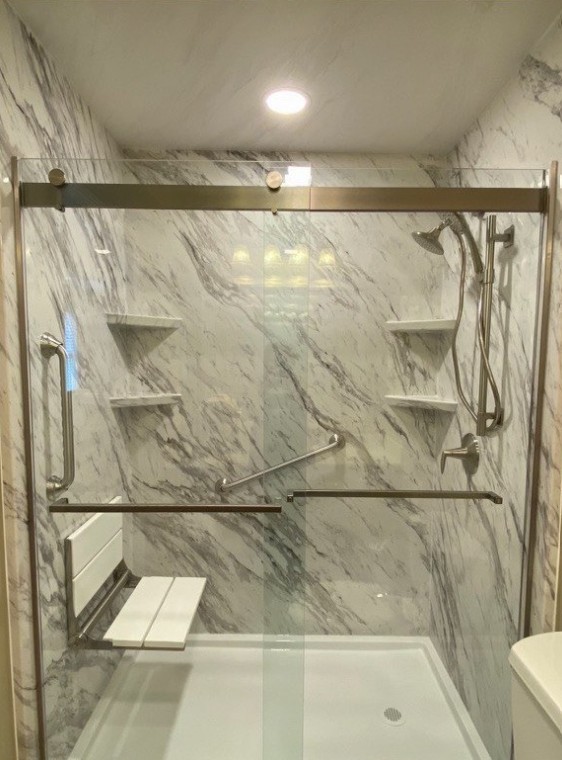 Practical decisions. Thoughtful planning.
An informed starting point
Understand the decision before choosing the finish
Both projects can create a new walk-in shower, but they start from different conditions. That matters for removal, measurements, drainage, and how the bathing area works with the room. A simple comparison should help you ask better questions, not pretend every tub conversion is identical.
For Greensboro homeowners, the first decision is whether the current fixture still serves the household. The next is whether changing the bathing area can meet the goal or whether work beyond it is needed. Start there before comparing wall patterns or relying on a one-day installation label.
Begin with your priorities
Describe the actual tasks, condition, or scope you want to improve. A specific question gives a consultation direction.
Check the whole arrangement
Review the layout, underlying preparation, products, and responsibilities together instead of assuming a label explains them.
Keep the plan in writing
Ask for selections, scope, timing, repair approvals, care, and applicable coverage so the decision remains understandable.
Planning detail 1
What a tub-to-shower conversion changes
A conversion removes the bathtub and installs a shower planned for the available area. It can be useful when baths are rarely taken or the step-over entry is uncomfortable. The footprint of the old tub provides a starting point for measurement, not a promise that any selected base will fit.
Review the drain, wall condition, enclosure opening, and relationship to the toilet and vanity. Reusing the general location does not guarantee unchanged plumbing. Discuss the low-entry base and any requested seating or support before approving the design.
Planning detail 2
What shower-to-shower replacement changes
A replacement starts with an existing shower and may update the base, walls, fixtures, enclosure, and accessories. If the location already works, the project can focus on the worn or inconvenient parts of the system. If the layout does not work, say so rather than expect new surfaces to solve it.
Recurring leaks deserve assessment, and a new system should address any underlying preparation needed. Ask which components are being removed and which remain. A shower wall update is not automatically equivalent to replacing the entire shower assembly.
Planning detail 3
Consider the household before removing a tub
Ask whether anyone still uses a bathtub and whether another bathroom provides one. A household with small children or a person who prefers baths may make a different choice from one that only takes showers. Your needs should guide the decision rather than a general claim that tubs are outdated.
We do not promise a resale-value increase from either choice. If retaining a tub matters, replacing a separate shower may achieve the goal. If the only bathing area is a tub, discuss what a conversion means for the whole household and the temporary plan during installation.
Planning detail 4
Compare entry, support, and care separately
A conversion and a shower replacement can both involve a low-threshold base, acrylic walls, shelves, seating, or support features. Those selections do not follow automatically from the starting fixture. Consider where controls and supplies are reached from standing or seated positions.
Neither 'walk-in' nor 'conversion' proves wheelchair access or a curbless installation. Floor structure, drainage, room circulation, and individual needs require review. Acrylic walls avoid grout-line cleaning, but joints, seals, surfaces, and hardware still need manufacturer-approved care.
Planning detail 5
Compare the scope instead of the project name
Ask each proposal to identify removal, disposal, preparation, base, walls, plumbing responsibilities, fixtures, enclosure, accessories, and cleanup. Clarify repair approval and any required permits. A conversion with repairs may involve more work than a straightforward replacement; the reverse can also be true.
Many suitable shower-focused installations can be completed in as little as one day, but ordering, scheduling, repairs, inspections, and cure times belong in the overall plan. Confirm the expected downtime and first-use instructions for the measured bathroom, not for the generic project category.
Primary sources and clear limits
Research to support better questions
Confirm the local review route
The City of Greensboro development-regulation resource describes permitting and inspection services. Its online permit guidance provides application context. Ask the office or contractor what applies to the exact address and proposed work; do not infer requirements from a generic one-day label.
If demolition disturbs painted surfaces in a pre-1978 home, discuss the EPA lead-safe renovation guidance before the work. This section is general planning information, not a permit or lead-paint determination.
| Decision | Tub-to-shower conversion | Shower replacement |
|---|---|---|
| Existing fixture | A bathtub | An existing shower |
| Main reason to explore | The tub no longer meets the routine | The shower needs a condition or layout update |
| Measure carefully | Alcove, drain, entry, retained fixtures | Base, drain, walls, enclosure, retained fixtures |
| Do not assume | No plumbing changes | New panels alone fix hidden damage |
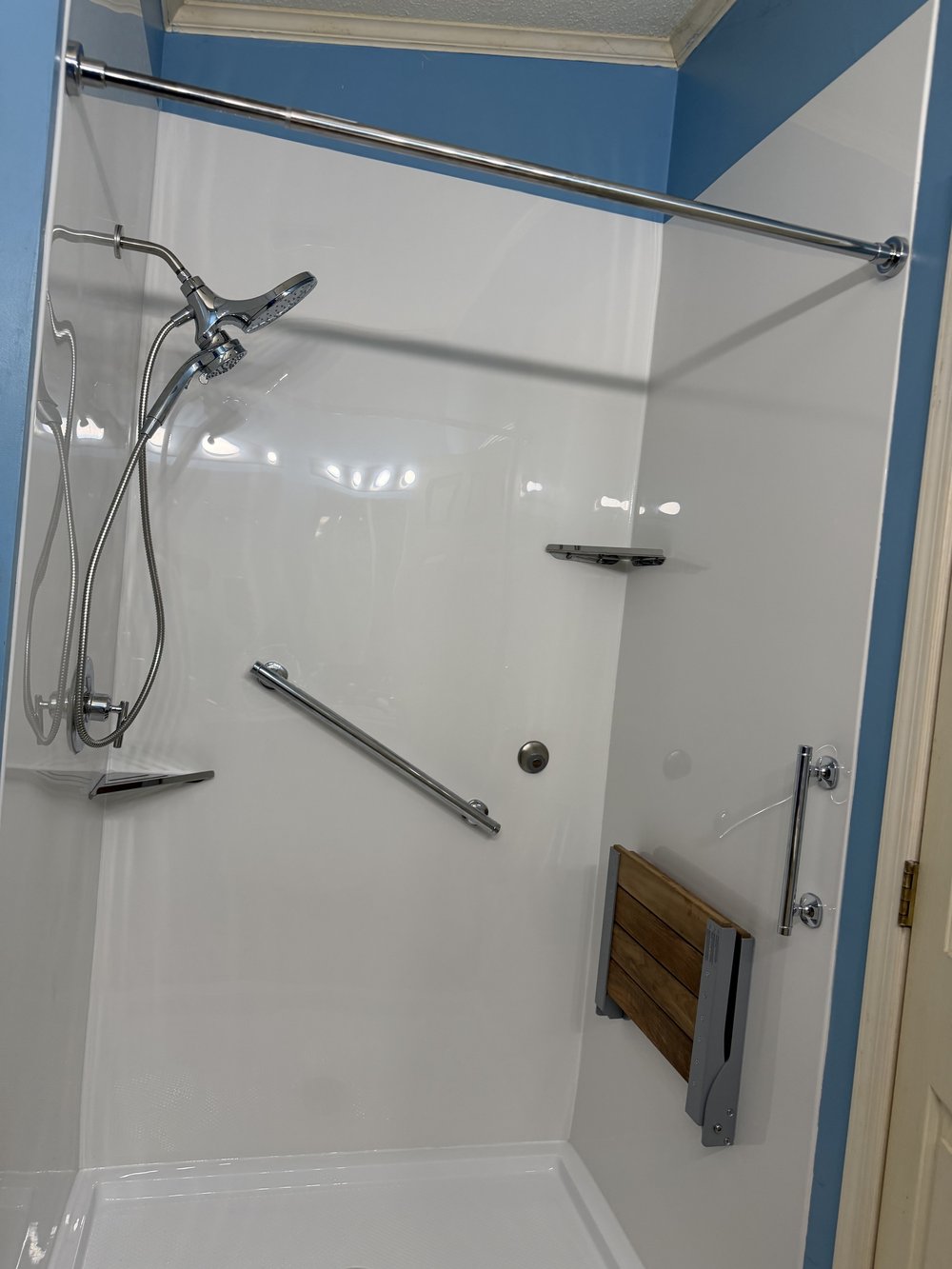
Prepare for the conversation
Your consultation checklist
- Confirm whether anyone in the household still needs a tub.
- List the problems with the current fixture individually.
- Discuss entry, seating, support, and controls together.
- Review matching complete scopes rather than material-only prices.
- Ask about preparation, permits, downtime, and first use.
What Revive Bath Co can discuss
Our published services focus on tub-to-shower conversions and shower replacements with acrylic walls. We do not install walk-in tubs. Tell us about any desired work outside the bathing area so the proposed scope and responsibilities are clear.
Use the design page to start a finish discussion, then confirm selections with the measured layout and written quote. See our service overview for the company’s offerings.
Direct answers
Frequently asked questions
Are these the same project?
No. They can produce a new shower, but they begin with different existing fixtures and conditions.
Can a conversion use the tub footprint?
It may use the general area, but measurements, the drain, base, and surrounding clearances determine what works.
Does replacing a shower mean no plumbing work?
No. The existing connections and proposed system need assessment. Ask what the quote includes.
Does Revive Bath Co offer both services?
Yes. The company offers tub-to-shower conversions and shower replacements with acrylic wall systems.
Which option should I ask about first?
Start with the fixture you have and the tasks you want to improve. A free consultation can establish the feasible scope.
Your next step
Discuss your bathroom with Revive Bath Co.
Book a free, no-obligation in-home consultation to explain your priorities, review the space, and discuss a written quote for the proposed shower work.
Keep reading
- How Much Does a Bathroom Remodel Cost in Greensboro, NC?
- 5 Signs It's Time for a Walk-In Shower in Greensboro, NC
- Acrylic vs. Tile Shower Walls: How to Choose for Your Remodel
Meet Revive Bath Co · Check the service area
Explore Winston-Salem, High Point, and Kernersville bathroom planning guides.
Sources & scope notes
- Greensboro: development regulation
- Greensboro: online building permit guidance
- EPA: renovation and lead-safe work guidance
Prepared for Revive Bath Co. This article is general homeowner planning information, not medical, legal, structural, or individualized accessibility advice. Gallery images are illustrative. No safety outcome, property-value increase, or search ranking is guaranteed. Confirm current requirements with the appropriate authority and product-specific instructions with the installer.