
Revive Bath Co · Homeowner guide
5 Signs It's Time for a Walk-In Shower in Greensboro, NC
Consider a walk-in shower when the tub entry is uncomfortable, you want seated bathing, the layout makes everyday tasks awkward, upkeep no longer suits you, or the existing system needs assessment. These are reasons to explore options, not proof that every bathroom needs replacement.
Clear planning information, primary-source links, and a scope you can discuss.
 Practical decisions. Thoughtful planning.
An informed starting point
Understand the decision before choosing the finish
Deciding to replace a tub should start with how the room works, not how old it looks. A bathroom can be dated yet useful, or attractive yet frustrating to use. The right question is whether the existing bathing area supports your household's actual routine.
For Greensboro homeowners, a conversion may focus on the bathing area rather than every fixture in the room. Before choosing it, distinguish a comfort or layout concern from an active leak or a mobility concern that deserves professional advice. This guide helps you decide what to bring to a consultation without turning ordinary observations into a diagnosis.
Begin with your priorities
Describe the actual tasks, condition, or scope you want to improve. A specific question gives a consultation direction.
Check the whole arrangement
Review the layout, underlying preparation, products, and responsibilities together instead of assuming a label explains them.
Keep the plan in writing
Ask for selections, scope, timing, repair approvals, care, and applicable coverage so the decision remains understandable.
Planning detail 1
1. Entering or leaving the tub has become uncomfortable
If the tub wall is awkward to step over, explain exactly where the difficulty occurs: approaching the tub, lifting a leg, turning, or stepping onto the bathroom floor. That description helps establish whether a different entry arrangement might address the problem. It does not establish the cause of a balance change.
A lower-threshold shower still has an edge. A curbless option requires separate assessment of floor structure, drainage, and the wider layout. If difficulty is new or you have fallen, seek appropriate health advice as well as evaluating the room. Remodeling cannot replace that assessment.
Planning detail 2
2. You would prefer to sit for part of the shower
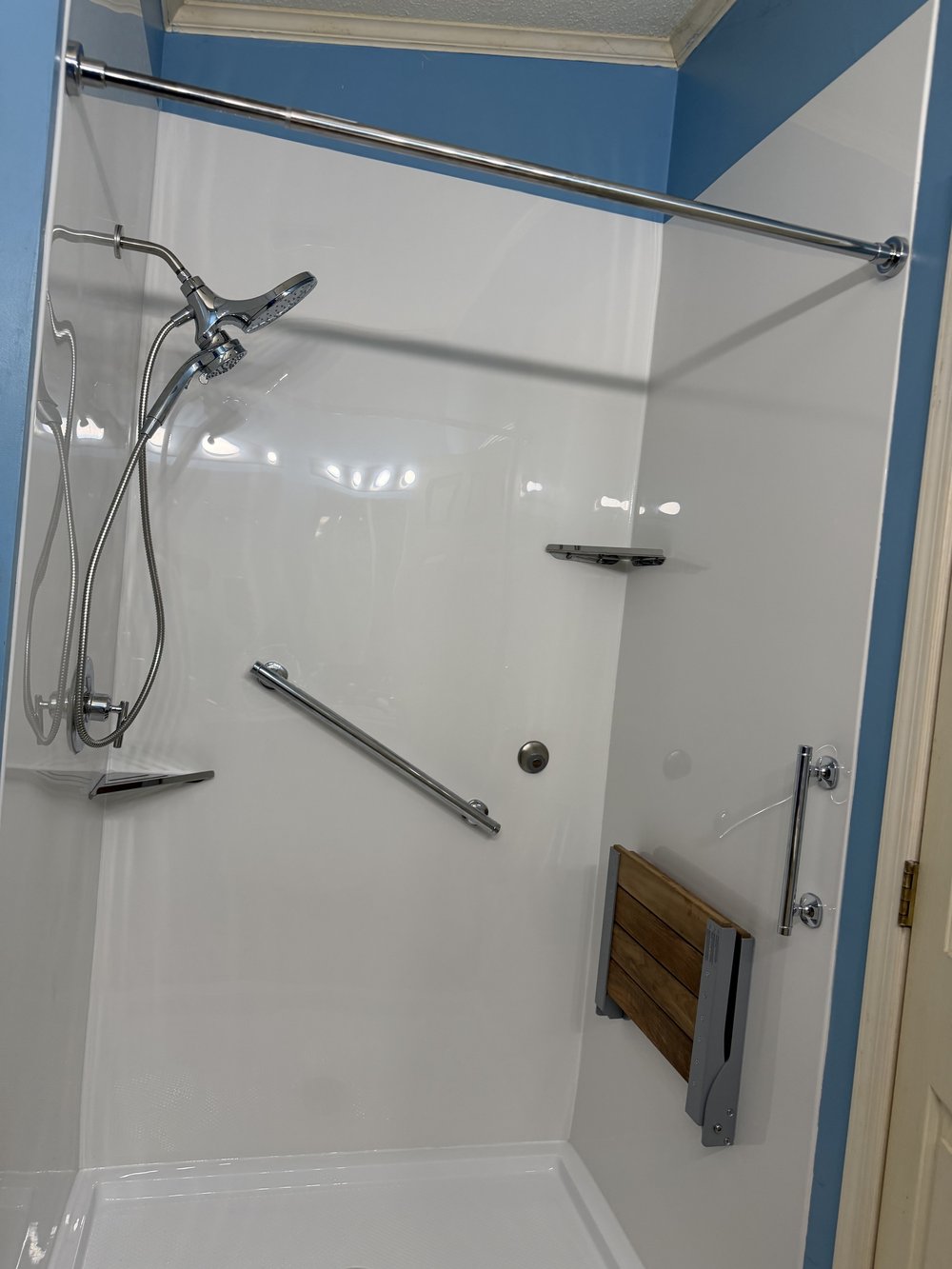
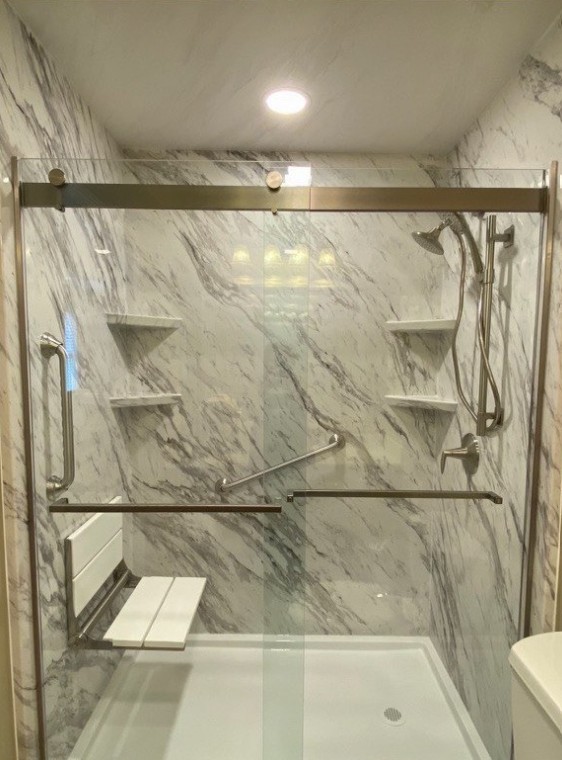
A seat can change how you use the bathing area, but it belongs in a complete plan with the controls, handheld showerhead, shelves, and support features. Ask where you would sit, what you need to reach, and how you would enter and leave. A seat shown in a gallery is not automatically suitable for your needs.
Discuss whether assistance or equipment is involved. A caregiver needs usable space, and a folding seat still requires appropriate installation and a suitable location. Choose the layout before deciding which accessory looks best.
Planning detail 3
3. The existing layout makes simple tasks awkward
Leaning into the spray to reach a valve, moving bottles to find room, or fighting an enclosure door are useful clues about the layout. Replacing an existing shower can be an opportunity to change those details, even if you do not have a bathtub to convert.
List the tasks that frustrate you and ask how the proposed arrangement changes each one. A larger base is not always the answer; it may create conflicts with a vanity or doorway. A measured plan should consider the approach to the shower as well as its interior.
Planning detail 4
4. Your maintenance routine no longer fits the surface
If grout-line cleaning or the enclosure has become burdensome, compare different systems and their actual care requirements. Acrylic panels avoid individually grouted wall tiles, but they still have surfaces, fixtures, joints, and seals that need attention. Do not buy a replacement on a maintenance-free promise.
Separate staining or residue from evidence of an ongoing water problem. Repeatedly resealing an area or finding water outside the shower is a reason for assessment, not simply a reason to choose a prettier panel. The cause should inform the scope.
Planning detail 5
5. The existing tub or shower needs condition assessment
Cracks, recurring leakage, or water staining deserve investigation before new finishes are selected. Some problems may be repairable; others may support replacing the system. The best next step depends on the cause and extent, not the number of visible signs you can count.
For active leakage, stop using the affected fixture and arrange appropriate help rather than wait for a sales visit. Share photographs and repair history. Ask how the contractor documents hidden findings and obtains approval for additional work instead of assuming every repair is covered by the initial proposal.
Primary sources and clear limits
Research to support better questions
Research with clear limits
The CDC analyzed nonfatal bathroom injuries treated in U.S. emergency departments among people aged 15 and older using data from 2008. Falls represented 81.1% of the estimated injuries in that analysis. This is historical national research, not a Greensboro injury rate or a measured reduction from remodeling.
The CDC research article discusses support and surface considerations. The National Institute on Aging aging-in-place guide and its home safety and accessibility resource provide additional planning context. Use them to prepare questions, not to promise an individual outcome.
| Observation | Ask first | Do not assume |
|---|---|---|
| Difficult entry | Which movement is awkward? | Low-entry means zero-entry |
| Seated bathing preference | Can controls and storage work from the seat? | Any seat will fit |
| Hard-to-clean surfaces | What care does the new system require? | New panels need no maintenance |
| Water outside the shower | What is causing it? | A wall replacement fixes every leak |
Prepare for the conversation
Your consultation checklist
- Write down the three daily tasks you want to improve.
- Tell the installer whether a seat, assistance, or mobility equipment is involved.
- Share leaks and previous repairs before selections are finalized.
- Review whether your household still needs a bathtub.
- Ask for the written scope, expected downtime, and first-use instructions.
What Revive Bath Co can discuss
Our published services focus on tub-to-shower conversions and shower replacements with acrylic walls. We do not install walk-in tubs. Tell us about any desired work outside the bathing area so the proposed scope and responsibilities are clear.
Use the design page to start a finish discussion, then confirm selections with the measured layout and written quote. See our service overview for the company’s offerings.
Direct answers
Frequently asked questions
Do these signs prove I need a new shower?
No. They help frame a consultation. Condition, layout, and your household's needs determine whether repair, replacement, or another change is appropriate.
Can I change only the bathing area?
Often, if the layout and condition support it. Confirm which surrounding fixtures and surfaces remain and how necessary repairs are handled.
Will a walk-in shower prevent every fall?
No. Features can address practical concerns, but no remodel makes a bathroom fall-proof or replaces individual assessment.
Can you install a walk-in tub instead?
Revive Bath Co specializes in walk-in showers with acrylic wall systems, not walk-in tubs.
How do I begin?
Schedule a free in-home consultation to measure the bathroom, explain your priorities, and discuss a written quote.
Your next step
Discuss your bathroom with Revive Bath Co.
Book a free, no-obligation in-home consultation to explain your priorities, review the space, and discuss a written quote for the proposed shower work.
Keep reading
- Aging-in-Place Bathroom Checklist for Greensboro Homeowners
- Bathroom Water Damage Signs: What to Check Before a Remodel
- Tub-to-Shower Conversion vs. Shower Replacement in Greensboro
Meet Revive Bath Co · Check the service area
Explore Winston-Salem, High Point, and Kernersville bathroom planning guides.
Sources & scope notes
- CDC: historical bathroom-injury research, U.S. data from 2008
- National Institute on Aging: aging in place
- National Institute on Aging: home safety and accessibility
Prepared for Revive Bath Co. This article is general homeowner planning information, not medical, legal, structural, or individualized accessibility advice. Gallery images are illustrative. No safety outcome, property-value increase, or search ranking is guaranteed. Confirm current requirements with the appropriate authority and product-specific instructions with the installer.